How to Find Decision Makers at Any Company (Complete Guide)
How to Find Decision Makers at Any Company is an essential skill for anyone involved in B2B sales, lead generation, or business development. Learning how to find decision makers at any company helps you connect with executives who have purchasing authority, improving your response rates and increasing your chances of closing more deals.
Finding the right decision maker is one of the most important steps in successful B2B lead generation. You can have the best product or service in the world, but if you’re contacting someone without purchasing authority, your outreach is unlikely to produce results.
Whether you’re a salesperson, agency owner, freelancer, recruiter, or entrepreneur, learning how to find decision makers at any company can dramatically increase your response rates, booked meetings, and revenue.
In this complete guide, you’ll learn proven methods, tools, and strategies to identify the right people inside any organization.
Why Finding Decision Makers Matters
Many sales professionals waste hours contacting employees who cannot approve purchases.
Decision makers are the people responsible for evaluating vendors, approving budgets, and making final purchasing decisions.
By targeting them directly, you can:
- Increase reply rates
- Book more qualified meetings
- Reduce wasted outreach
- Improve email conversion
- Close deals faster
- Build stronger business relationships
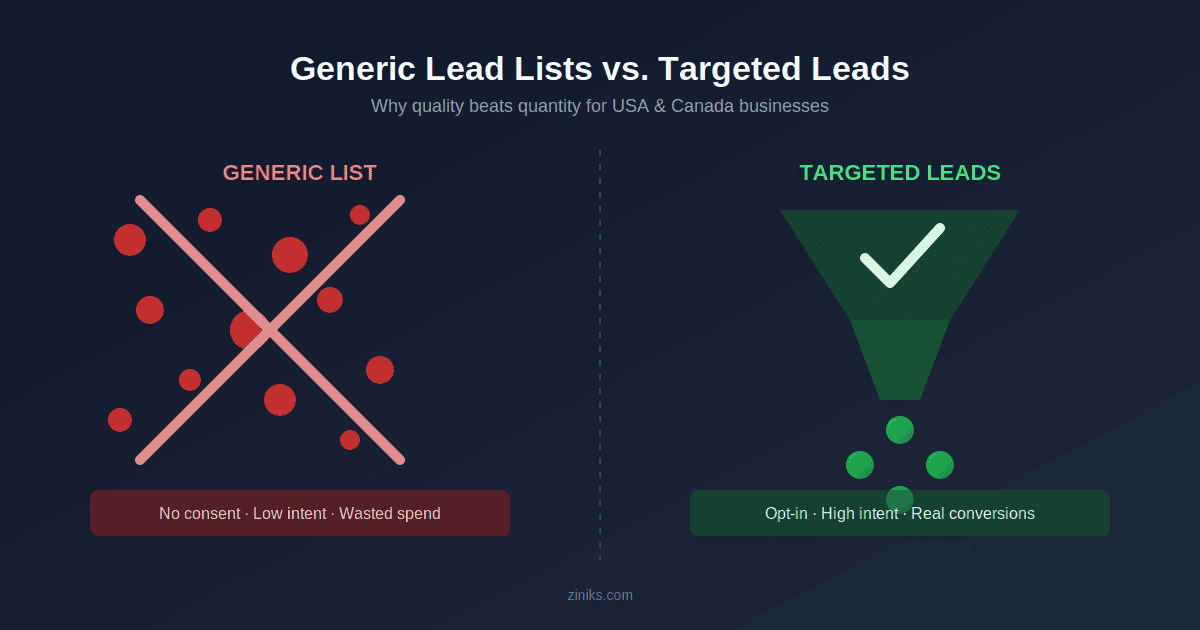
Instead of sending hundreds of emails to random employees, focus on the individuals who actually influence purchasing decisions.
Who Is a Decision Maker?
A decision maker is someone who has the authority—or significant influence—to approve products, services, or partnerships.
Common decision maker titles include:
Executive Leadership
- CEO
- Founder
- Co-Founder
- President
- Managing Director
- Owner
- Partner
Sales
- VP of Sales
- Sales Director
- Head of Sales
- Sales Manager
Marketing
- CMO
- Marketing Director
- Growth Manager
- Demand Generation Manager
- Digital Marketing Manager
IT
- CTO
- CIO
- IT Director
- Head of Technology
Human Resources
- HR Director
- Head of Talent
- People Operations Manager
Operations
- COO
- Operations Director
- Supply Chain Manager
Different industries have different decision makers, so always research the company before reaching out.
Step 1: Understand the Company’s Structure
Before searching for contacts, determine:
- Company size
- Industry
- Number of employees
- Headquarters
- Departments
- Organizational hierarchy
Small businesses often have founders making every decision.
Large enterprises usually involve department heads and executives.
Understanding the structure helps you identify the right person faster.
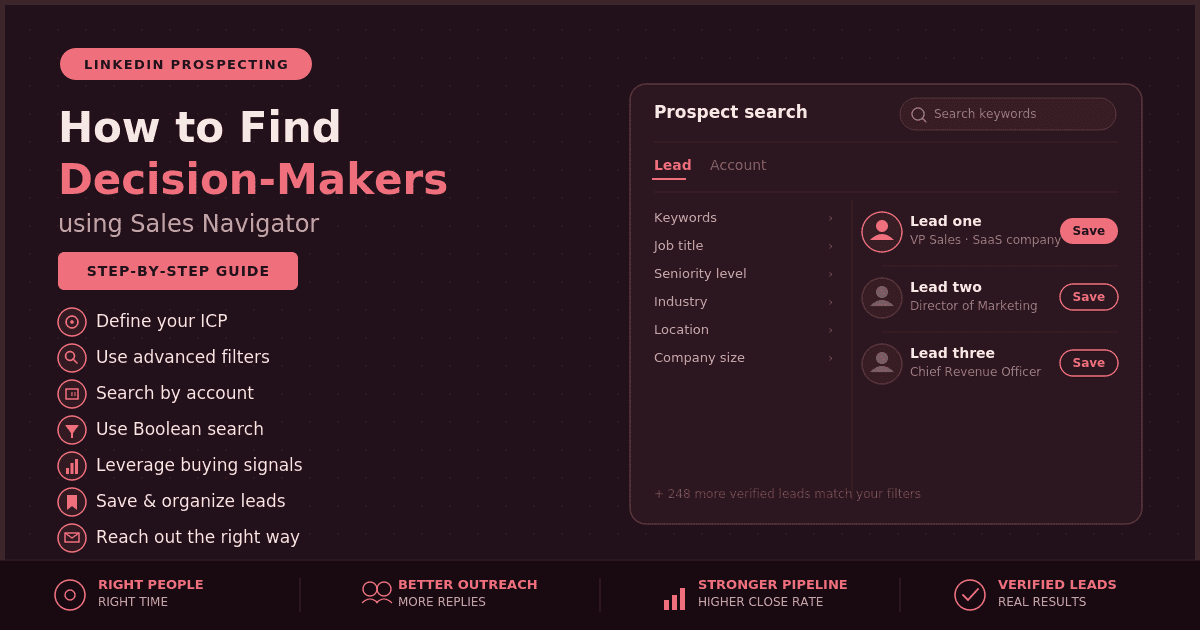
Step 2: Use LinkedIn Effectively
LinkedIn is one of the best places to find decision makers.
Search using:
Company Name + CEO
Company Name + Marketing Director
Company Name + Sales Manager
Company Name + Founder
Then filter results by:
- Current company
- Job title
- Location
- Seniority
Look for employees with executive or leadership positions.
Step 3: Visit the Company Website
Many companies list leadership teams on their website.
Check pages like:
- About Us
- Team
- Leadership
- Executive Team
- Management
- Contact
- Our People
You’ll often find:
- CEO
- Directors
- Department Heads
- Leadership biographies
These pages provide valuable information for personalized outreach.
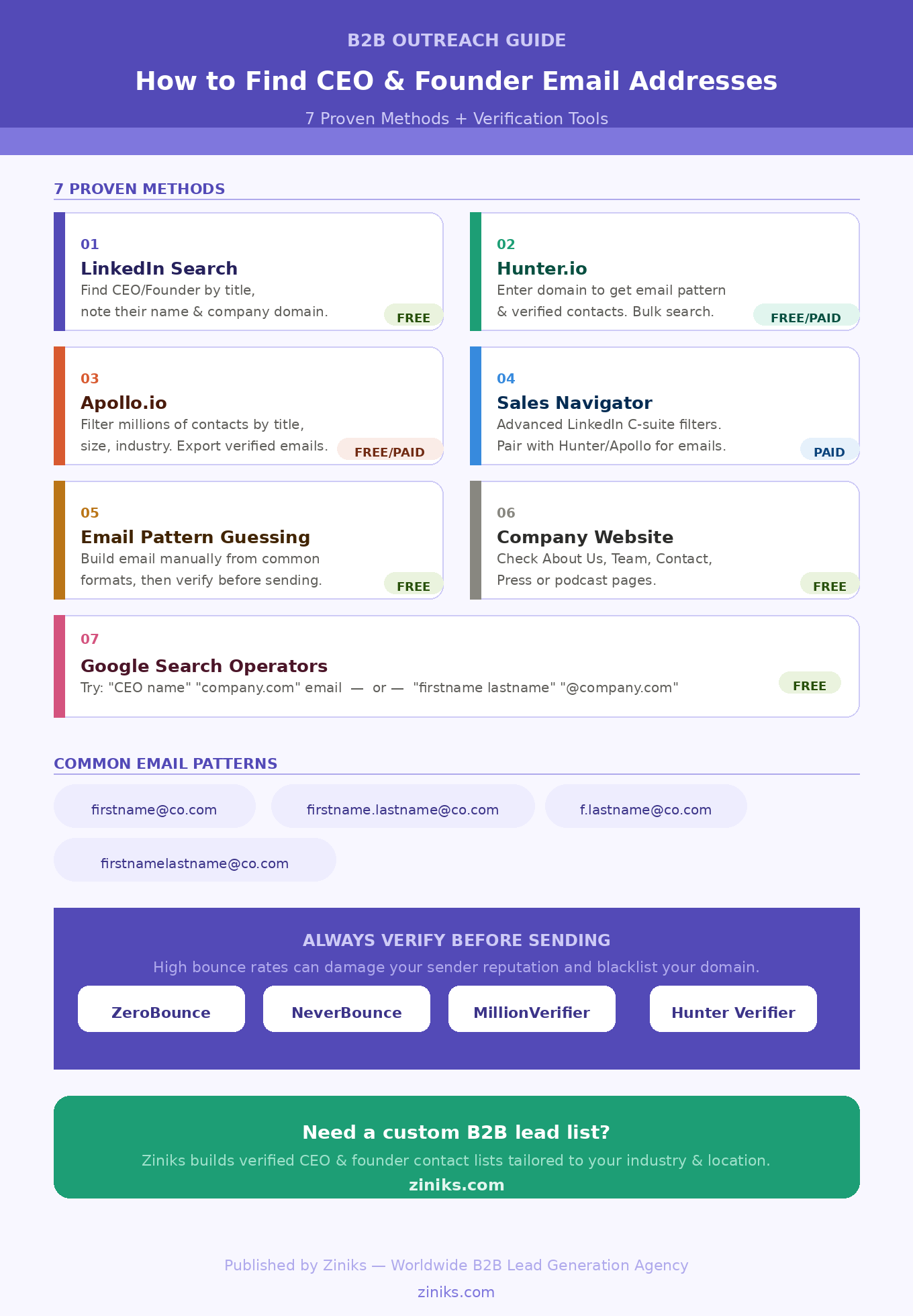
Step 4: Use Lead Generation Tools
Professional lead generation tools can significantly speed up your research.
Popular options include:
- LinkedIn Sales Navigator
- Apollo
- ZoomInfo
- Lusha
- ContactOut
- RocketReach
- Cognism
- Hunter
- Clearbit
- Seamless.ai
These tools help identify:
- Decision makers
- Work emails
- Phone numbers
- Company details
- Job titles
Always verify contact information before launching campaigns.
Step 5: Search Google Strategically
Google is incredibly useful when used with advanced search operators.
Examples:
site: linkedin.com Company Name CEO
site:company website.com leadership
Company Name executive team
Company Name marketing director
Company Name management
This often reveals information that basic searches miss.
Step 6: Analyze Press Releases
Companies frequently announce:
- New executives
- Promotions
- Partnerships
- Funding rounds
- Product launches
These announcements often identify the key decision makers responsible for important initiatives.
Step 7: Review Company Social Media
Check:
- X (Twitter)
Leadership members often appear in:
- Company announcements
- Interviews
- Event photos
- Webinar promotions
- Podcasts
These platforms can reveal both decision makers and their current priorities.
Step 8: Use Business Directories
Industry directories often list executives.
Examples include:
- Crunchbase
- Clutch
- GoodFirms
- AngelList
- Chamber of Commerce listings
- Industry association directories
These sources are especially useful for startups and growing businesses.
Step 9: Identify Buying Committees
Large companies rarely have just one decision maker.
You may need to contact multiple stakeholders.
Examples:
| Department | Typical Decision Maker |
|---|---|
| Marketing | Marketing Director |
| Sales | VP of Sales |
| IT | CTO |
| HR | HR Director |
| Finance | CFO |
| Operations | COO |
Understanding buying committees improves outreach success.
Step 10: Verify Contact Information
Never assume an email is valid.
Use verification tools such as:
- NeverBounce
- ZeroBounce
- MillionVerifier
- Hunter Email Verifier
This reduces bounce rates and protects your sender reputation.
Personalize Every Outreach
Finding the right decision maker is only half the process.
Personalization dramatically improves response rates.
Mention:
- Recent company news
- Product launches
- Awards
- Hiring activity
- Industry trends
- Shared connections
Avoid generic emails that sound automated.
Common Mistakes to Avoid
Many outreach campaigns fail because of these mistakes:
- Contacting junior employees
- Sending generic cold emails
- Using outdated contact information
- Ignoring company size
- Not verifying email addresses
- Pitching before researching
- Contacting the wrong department
Avoiding these errors can significantly improve your campaign performance.
Best Tools for Finding Decision Makers
| Tool | Best For |
|---|---|
| LinkedIn Sales Navigator | Professional prospecting |
| Apollo | Contact database |
| ZoomInfo | Enterprise contacts |
| Hunter | Email discovery |
| Lusha | Phone numbers |
| ContactOut | Recruiter data |
| RocketReach | Contact information |
| Crunchbase | Company research |
| Clearbit | Company enrichment |
| Free research |
Pro Tips for Better Results
- Research the company before outreach.
- Target senior-level professionals.
- Verify every email address.
- Personalize every message.
- Follow up consistently.
- Use multiple data sources.
- Track outreach performance.
- Keep your CRM updated.
- Focus on quality over quantity.
- Build long-term relationships.
Frequently Asked Questions (FAQs)
How do I identify the decision maker at a company?
Use LinkedIn, the company website, business directories, and lead generation tools to identify executives or department heads responsible for purchasing decisions.
What is the best tool for finding decision makers?
LinkedIn Sales Navigator is widely considered one of the best tools, while Apollo, ZoomInfo, and Hunter are also excellent options.
Who are the main decision makers in B2B companies?
Common decision makers include CEOs, Founders, COOs, CTOs, CMOs, Sales Directors, Marketing Directors, and department managers.
Why is finding the right decision maker important?
Reaching the right person improves response rates, shortens sales cycles, and increases the likelihood of closing deals.
Should I contact multiple decision makers?
Yes. In larger organizations, purchasing decisions often involve multiple stakeholders across different departments.
How to Find Decision Makers at Any Company?
The easiest way to find decision makers at any company is by using LinkedIn, company websites, executive directories, and professional lead generation tools like Apollo, ZoomInfo, and Hunter. Always verify contact information before reaching out.
How to Find Decision Makers at Any Company Using LinkedIn
Learning how to find decision makers at any company can dramatically improve your sales outreach. Instead of contacting random employees, focus on executives and department heads who have purchasing authority. Businesses that know how to find decision makers at any company often generate more qualified leads, higher reply rates, and better conversion rates.
Final Thoughts
Mastering how to find decision makers at any company is a valuable skill for anyone involved in B2B sales, lead generation, recruiting, or business development. By combining company research, LinkedIn, business directories, and professional prospecting tools, you can identify the right contacts and improve your outreach effectiveness.
Rather than relying on generic contact lists, focus on verified, relevant decision makers who have the authority to act. This targeted approach saves time, increases engagement, and leads to more meaningful business conversations.